
Outdoor and site-based workplaces frequently involve people working around vehicles, equipment and changing environmental conditions. Appropriate high visibility workwear can help workers remain more noticeable in environments where being easily seen is important.
However, a visibility clothing strategy should never be reduced to simply purchasing bright garments. Employers need to consider the work environment, lighting, garment condition, employee comfort and applicable workplace requirements when developing their clothing program.
Understand the Working Environment
Visibility challenges change throughout the day.
A worker may be easy to identify in bright daylight but less visible in poor weather, shadows or lower-light conditions.
Employers should review:
- Work times
- Lighting
- Background colours
- Vehicle movement
- Machinery
- Weather
- Worksite layout
- Employee tasks
This assessment helps determine appropriate clothing for each role.
Day and Low-Light Conditions Are Different
Some garments are primarily intended to provide enhanced visibility during daylight conditions.
Other workplace situations may require reflective components that help increase recognition under certain lighting.
Businesses should always check applicable site and workplace requirements before selecting garments.
The Outermost Layer Matters
A worker may begin the day in a visibility shirt but later put a dark jacket over it.
If the outer garment hides the visibility characteristics, the original clothing can no longer perform the same visual function.
Seasonal planning should therefore include all layers.
Vests Offer a Flexible Option
Vests can be particularly useful when teams need a lightweight layer that can be placed over other clothing.
Businesses comparing options can explore custom high vis vests for situations where visibility and company identification need to work together.
Vests may be useful for:
- Visitors
- Site supervisors
- Event crews
- Warehouse teams
- Delivery staff
- Contractors
- Temporary personnel
The correct garment should still be selected according to the specific work environment.
Comfort Encourages Proper Use
If visibility clothing is uncomfortable, employees may be less willing to wear it correctly for an entire shift.
Consider:
- Weight
- Ventilation
- Fit
- Closures
- Freedom of movement
- Layering
- Climate
A lightweight option may be preferable in warm conditions, while colder environments can require more substantial layers.
Fit Should Not Interfere With Work
A vest that is too loose may become cumbersome.
One that is too tight may restrict movement, particularly when worn over other clothing.
Sizing should account for how the garment will actually be used.
If it will frequently be worn over a jumper or jacket, the fit needs to accommodate that layer.
Branding Can Improve Team Identification
A company logo can help distinguish employees, contractors or different work groups.
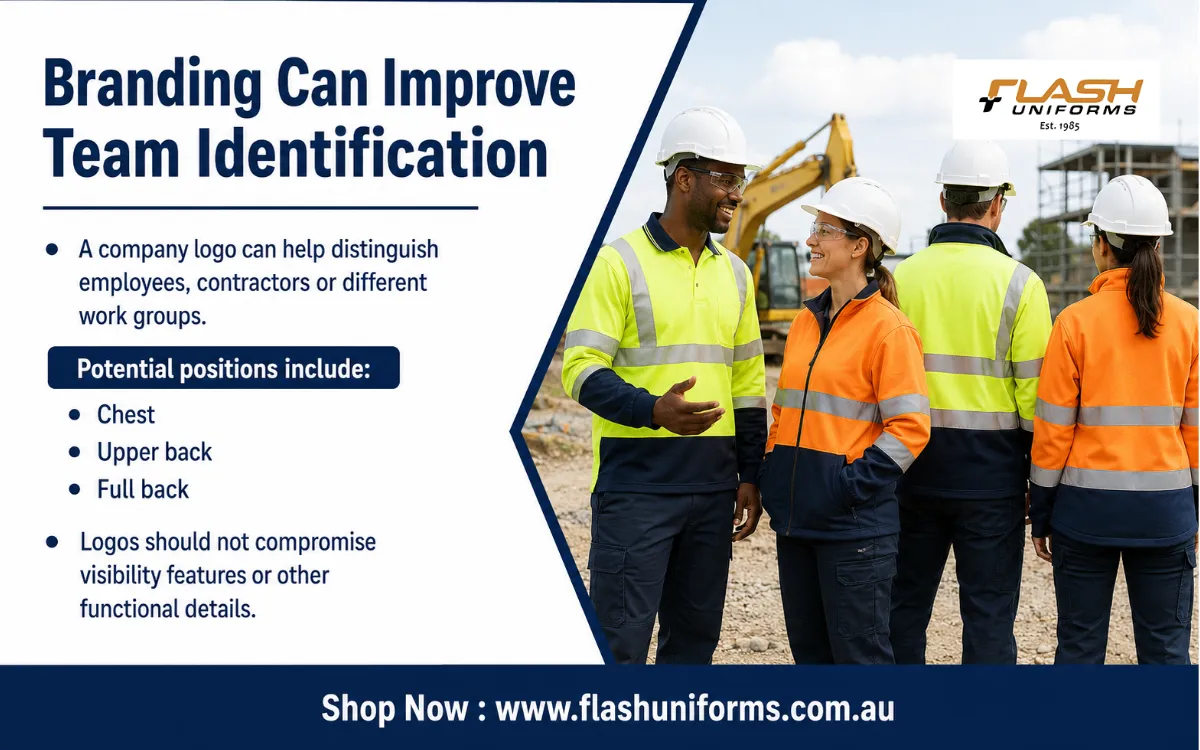
Potential positions include:
- Chest
- Upper back
- Full back
However, branding must be planned around important garment elements.
Logos should not compromise visibility features or other functional details.
Colour Should Suit the Environment
The purpose of visibility clothing is contrast.
Environmental backgrounds can vary considerably between road projects, warehouses, construction sites and outdoor work.
Businesses should consider the surroundings when selecting garments.
They should also assess workplace rules regarding approved colours.
Keep Garments Clean
Dirt and wear can reduce the effectiveness and professional appearance of work clothing.
Employees working in dusty or muddy conditions may need additional garments so they can rotate them regularly.
Provide clear washing and care instructions.
Where a garment is damaged, heavily faded or permanently soiled, assess whether it remains suitable for continued use.
Inspect Visibility Clothing Regularly
A planned inspection process can help identify worn garments.
Check for:
- Fading
- Damaged reflective elements
- Torn fabric
- Broken zips
- Missing fasteners
- Permanent contamination
- Poor fit
Employees should also be encouraged to report problems themselves.
Coordinate Vests With the Rest of the Wardrobe
High-visibility garments do not exist in isolation.
Workers may also need:
- Shirts
- Polos
- Trousers
- Shorts
- Hoodies
- Jackets
- Rainwear
Build the wardrobe as a complete system.
This makes it easier to maintain appropriate visibility as conditions and seasons change.
Consider Visitors and Contractors
Employees are not the only people who may require visibility clothing.
Some sites need garments for:
- Visitors
- Inspectors
- Temporary staff
- Contractors
- Delivery personnel
Keeping suitable sizes and clearly identified garments available can make site management simpler.
Train Employees on Clothing Expectations
Workers should understand which garments are required and when.
A clothing policy can explain:
- Approved products
- Required layers
- Care expectations
- Replacement process
- Site-specific differences
Training should form part of the broader workplace safety system.
Never Treat Clothing as the Entire Safety Strategy
Visibility garments are one part of workplace risk management.
They do not replace traffic management, barriers, training, lighting, safe procedures or other controls.
Employers should evaluate hazards comprehensively and use clothing in conjunction with appropriate workplace measures.
Why Choose Flash Uniforms?
Flash Uniforms provides Australian businesses with access to safety-focused workwear, visibility garments and custom branding solutions across recognised workwear brands. Employers can explore vests, shirts, jackets and complementary garments when creating a coordinated clothing program for different job roles and seasonal conditions. Customisation can also help teams remain professionally identifiable while wearing workplace-appropriate clothing.
Final Thoughts
Visibility clothing can play an important role for outdoor, industrial and site-based teams, but garment selection should always begin with the workplace.
Assess lighting, movement, weather, role requirements and the other layers employees wear.
Choose comfortable garments, keep them in suitable condition and develop clear replacement procedures.
Most importantly, integrate high visibility workwear into the organisation’s wider approach to workplace safety instead of treating a bright garment as a complete solution.
